A mode is a scale you get by playing the notes of a major scale but treating a different note as home. C major is C D E F G A B. Play those same seven notes from D to D and, if D feels like the center, you're playing D Dorian. From A to A, it's A Aeolian: the natural minor scale.
Each starting note gives a mode with its own mood, because the gaps between the notes fall in different places:
| Start | Mode | Sound |
|---|---|---|
| C | Ionian | major, bright |
| D | Dorian | minor, smooth |
| E | Phrygian | minor, dark, Spanish |
| F | Lydian | major, dreamy |
| G | Mixolydian | major, bluesy |
| A | Aeolian | minor, sad |
| B | Locrian | unstable, rarely used |
The important part: the mode is decided by the chord or bass note underneath, not by which note you start on. Over a D minor chord, the C major notes sound like D Dorian.
The exercises
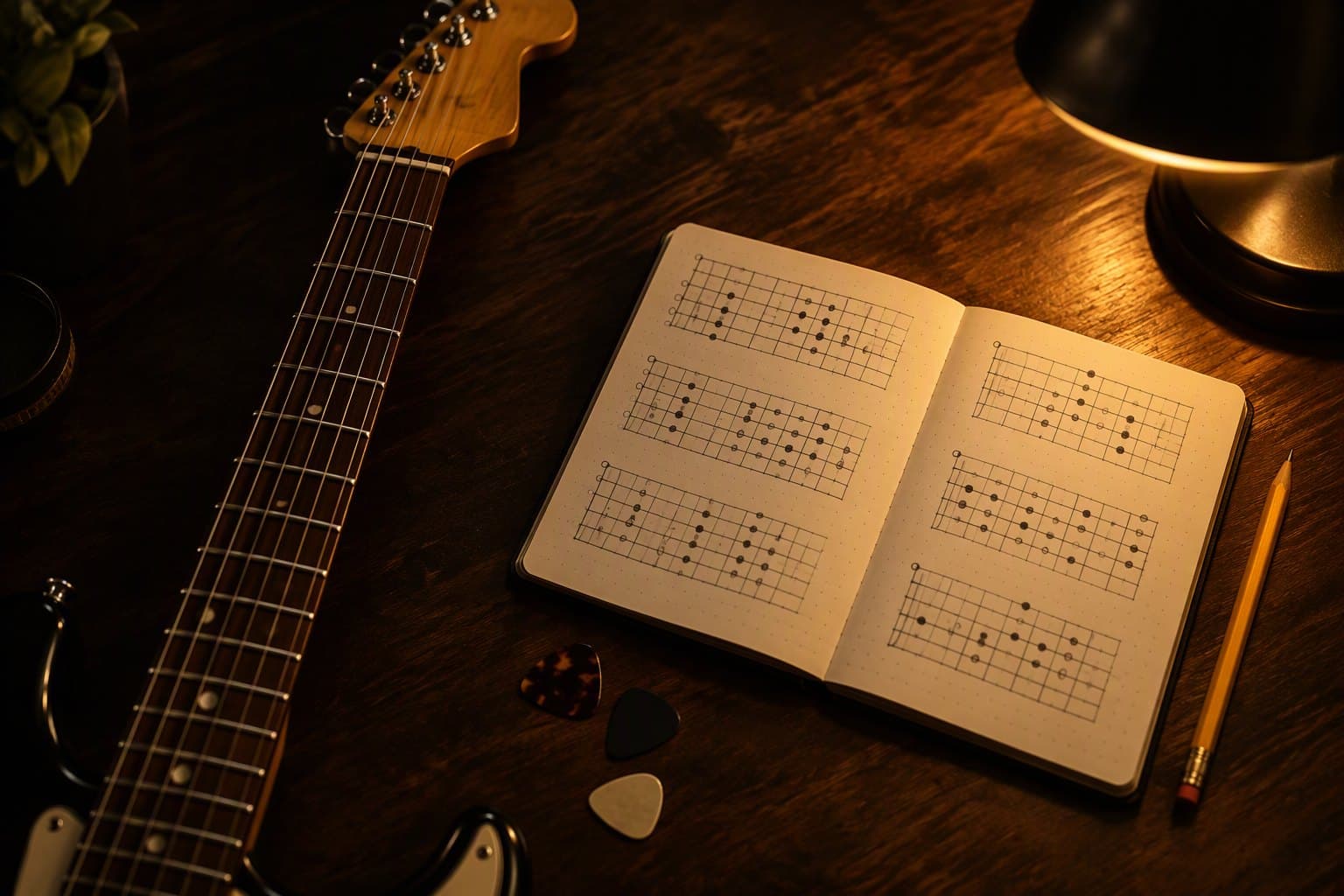
All notes are from C major, in one position (frets 2-5). Play C to C, then D to D, then A to A from the open A string, then E to E and G to G, and finally D to D and back to D. Let the last note ring and listen: does it feel finished?
The common mistake is thinking modes are new shapes to memorize. They're new homes for notes you already know. Practice slowly and hum the first note before you play each run.