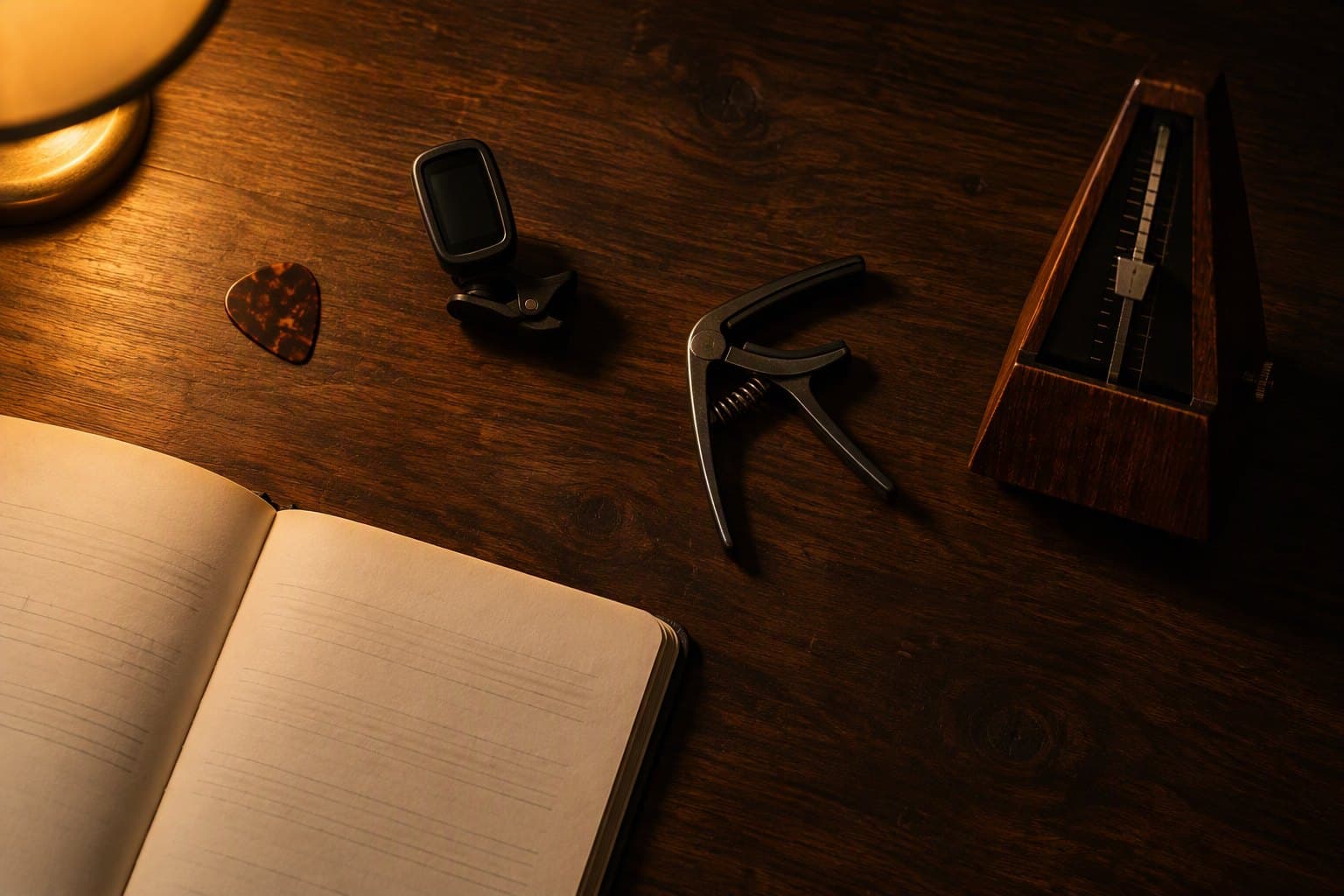
You can't hear yourself properly while you play: your attention is on your hands. A recording hears everything. Your phone is enough.
What to listen for
- Timing. Record with the metronome on. Are the notes on the click, or rushing at the chord changes?
- Buzz. A fizzy sound means a finger is too far from the fret or not pressing quite hard enough.
- Unwanted ringing. Notes that keep sounding into a rest, or open strings you didn't mean to hit.
Listen once for each item, not all three at once. Then write down one thing to fix and make that tomorrow's goal.
The exercises
Stop the ring. A C major arpeggio with a rest after each note. In each rest the note must stop: ease off the fretting finger without leaving the string, or touch the open G with the side of your picking hand. Record it; rests that still ring are easy to hear on playback.
Four-bar take. A minor, G, C and E minor with the down, down-up, up-down-up pattern. Play it four times and record the whole take. No stopping, even after a mistake: you're practicing performance, not repair.
Rest
Your hands improve between sessions, not just during them. Two 15-minute sessions a day beat one 30-minute session. Take a short break every 10-15 minutes: drop your arms, shake out your hands, roll your shoulders.
Watch for tension. If your thumb is squeezing the neck, your shoulder is rising or your wrist aches, stop and reset. Pain means stop, not push through. If it doesn't go away after a rest day, see a doctor.